

This article discusses some important differences that the circular bowl and rectangular trough vibratory finishing machines have from one another. Each machine has a very special job in the finishing process, and knowing the subtle differences will be of great help in your choice of equipment for what you need.
Quick answer: bowl or trough?
A vibratory bowl is usually best for small to medium-sized components that can be processed together in batches. The circular movement helps parts and media flow around the bowl in a consistent motion, making bowls well suited to general deburring, radiusing, smoothing and polishing.
A vibratory trough is usually best for longer, larger, delicate or awkward components, especially where part-on-part contact could cause damage. Troughs can often be sectioned with divider plates, allowing components to be kept apart during the finishing cycle. As a simple rule: Choose a vibratory bowl when you need efficient batch processing of smaller components. Choose a vibratory trough when component size, length, delicacy or separation control is more important.
What is a vibratory bowl finishing machine?
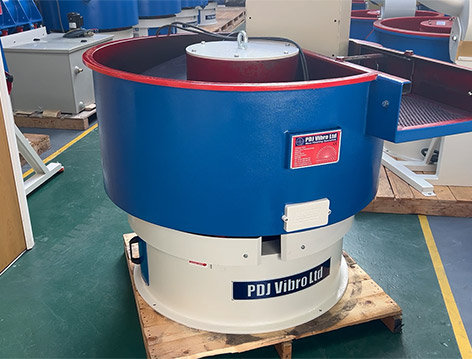
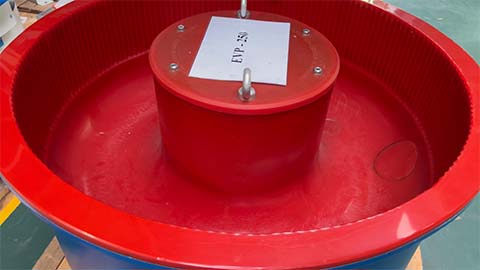
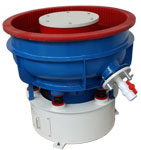
A vibratory bowl finishing machine has a circular work chamber. Components, media and compound move together through the bowl as the machine vibrates. This creates controlled friction between the media and component surfaces, helping to remove burrs, improve edges, clean surfaces or develop a more consistent finish.
Circular bowls are commonly used for small to medium-sized components across general engineering, medical, aerospace, automotive, metalworking and subcontract finishing environments.
They are often a strong fit when the process needs:
- Efficient batch finishing
- Consistent contact between media and components
- General deburring or edge breaking
- Radiusing
- Cleaning or surface smoothing
- Polishing or pre-plating surface improvement
- Repeatable results across regular production batches
The main advantage of a bowl is production efficiency. Where components can safely move together, a bowl can be a highly practical way to reduce manual finishing, improve consistency and free up operator time.
What is a vibratory trough finishing machine?
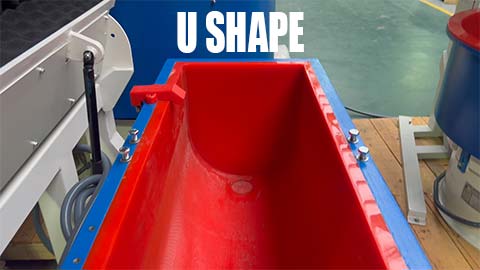
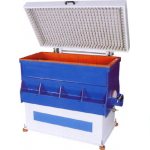
A vibratory trough finishing machine uses a rectangular chamber. Instead of moving around a circular bowl, the media and parts move through a longer trough-shaped work area.
Trough machines are often chosen when components are too large, too long, too delicate or too awkward for a circular bowl. They are especially useful where parts need to be separated to reduce the risk of contact damage.
Troughs are commonly used for:
- Long components
- Large components
- Flat parts
- Delicate parts
- Parts that may mark or chip if they collide
- Components needing separation during processing
- Lower-volume, higher-value work
- Specialist finishing applications where control matters more than pure batch speed
Divider plates can be used to create separate chambers inside the trough. This is useful when parts need to be protected from one another or when the finishing process needs tighter control.
The main difference: movement and part control
The real difference between a bowl and a trough is not simply the shape of the machine. It is how the shape affects component movement, media flow and part contact.
In a vibratory bowl, the circular movement helps parts and media flow around the machine. This is efficient where parts can be safely processed together.
In a vibratory trough, the longer chamber gives more control over how parts sit and move during the process. For long or delicate components, this can reduce the risk of impact damage, chatter marks or inconsistent contact.
This matters because the wrong machine can create avoidable problems, including:
- Parts marking each other during the cycle
- Media lodging between the component and machine wall
- Inconsistent surface finishes
- Longer finishing times
- Manual rework
- Poor separation after finishing
- Unnecessary production delays
The aim is not to buy the biggest or most powerful machine. The aim is to match the machine to the part, the finish required and the production process.
When a vibratory bowl is usually the better choice
A vibratory bowl is likely to be the better choice when your parts are small or medium sized and can be processed in batches without unacceptable part-on-part contact.
Bowls are commonly selected when manufacturers want to improve efficiency, reduce hand finishing and achieve repeatable results across regular production runs.
A bowl may be right if:
- Your parts can move freely with media
- Components are not easily damaged by light contact
- You process regular batches
- You need efficient separation after processing
- Your priority is throughput and repeatability
- You want a practical machine for everyday deburring or polishing
- You need a process that operators can learn and repeat consistently
For many production environments, a circular bowl is the most practical starting point.
When a vibratory trough is usually the better choice
A vibratory trough is likely to be the better choice when the shape, length, size or value of the component makes part control more important.
Troughs are particularly useful when components cannot be allowed to tumble freely together. By using divider plates, parts can be kept separate during processing, reducing the risk of impact damage or marking.
A trough may be right if:
- Your components are long or awkwardly shaped
- Parts are delicate or easily marked
- Part-on-part contact is a concern
- You need to process larger components
- You want to use divider plates
- Your parts need more controlled movement
- Finish consistency is more important than maximum batch volume
- You are processing higher-value components where rework is expensive
For larger, longer or more sensitive components, a trough can give the level of control that a circular bowl may not provide.
U-shaped troughs vs double-curve troughs
Trough shape also matters.
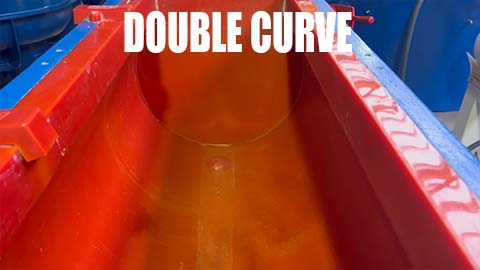
A U-shaped trough is a common option and works well for many components. However, with some larger parts, media can become trapped between the component and the side wall. This can sometimes contribute to chatter marks or uneven finishing.
A double-curve trough can help reduce this issue by improving how the component and media move together during the process. It can be a better option when component protection and finish quality are critical.
This is exactly the kind of decision that should be tested with real parts. Component size, material, surface condition, media type, compound and cycle time all affect the result.
Bowl vs trough comparison
| Decision factor | Vibratory bowl | Vibratory trough |
|---|---|---|
| Best for | Small to medium components | Long, large, delicate or awkward components |
| Part movement | Circular flow | Longer trough movement |
| Batch efficiency | Often stronger | More controlled but may be more manual |
| Part separation | Depends on machine setup | Divider plates can separate parts |
| Risk of part-on-part damage | Lower when parts are suitable for batch processing | Often better for sensitive parts |
| Typical uses | Deburring, polishing, radiusing, smoothing, cleaning | Long parts, delicate parts, controlled finishing |
| Buyer priority | Throughput and repeatability | Control, protection and component fit |
Do not choose by machine type alone
One of the biggest mistakes is choosing the machine before testing the part.
The right finishing process depends on more than the machine. You also need to consider:
- Component material
- Component size and geometry
- Burr size and location
- Required edge radius
- Surface finish requirement
- Media shape and grade
- Compound selection
- Cycle time
- Water and effluent requirements
- Drying requirements
- Manual handling
- Part separation
- Inspection standards
- Production volume
A bowl may look right on paper but mark the component. A trough may protect the component but be slower than required. The only reliable answer comes from testing the actual parts wherever possible.
Why sample processing matters
Sample processing helps prove the process before you commit to equipment.
By testing your components with the right machine, media and compound, you can see the finish quality, check for part damage, estimate cycle time and understand whether the process can replace or reduce hand finishing.
This is especially important if you are:
- Moving away from manual deburring
- Trying to reduce polishing bottlenecks
- Finishing high-value components
- Handling parts with tight tolerances
- Dealing with inconsistent results
- Unsure which media or compound to use
- Comparing new equipment with subcontract finishing
A short trial can prevent the wrong machine choice and give your production team more confidence before investment.
Where PDJ Vibro can help
PDJ Vibro supplies vibratory bowls, vibratory troughs, centrifugal finishing machines, dryers, media, compounds and subcontract finishing services.
That means we can help you look at the complete process, not just the machine. If a new machine is right, we can advise on the best fit. If subcontract finishing is more practical, we can help with that too. If media, compound or process settings are the issue, we can help diagnose the problem.
Our Bletchley showroom holds a wide range of vibratory finishing machines and media, giving customers the chance to see different options and discuss real applications with experienced technical specialists.
Speak to PDJ Vibro before choosing your machine
Choosing between a vibratory bowl and a vibratory trough is easier when you start with the component, not the catalogue.
Tell us what you are processing, what finish you need and what problems you are trying to solve. We can advise whether a bowl, trough, subcontract process or different finishing route is likely to suit your application.
You can also send components for sample processing so the process can be tested before you make a decision.
Call PDJ Vibro on 01908 648757 or contact our technical team to discuss your application.
A bowl may look right on paper but mark the component. A trough may protect the component but be slower than required. The only reliable answer comes from testing the actual parts wherever possible.
Why sample processing matters
Sample processing helps prove the process before you commit to equipment.
By testing your components with the right machine, media and compound, you can see the finish quality, check for part damage, estimate cycle time and understand whether the process can replace or reduce hand finishing.
This is especially important if you are:
- Moving away from manual deburring
- Trying to reduce polishing bottlenecks
- Finishing high-value components
- Handling parts with tight tolerances
- Dealing with inconsistent results
- Unsure which media or compound to use
- Comparing new equipment with subcontract finishing
A short trial can prevent the wrong machine choice and give your production team more confidence before investment.
Where PDJ Vibro can help
PDJ Vibro supplies vibratory bowls, vibratory troughs, centrifugal finishing machines, dryers, media, compounds and subcontract finishing services.
That means we can help you look at the complete process, not just the machine. If a new machine is right, we can advise on the best fit. If subcontract finishing is more practical, we can help with that too. If media, compound or process settings are the issue, we can help diagnose the problem.
Our Bletchley showroom holds a wide range of vibratory finishing machines and media, giving customers the chance to see different options and discuss real applications with experienced technical specialists.
Speak to PDJ Vibro before choosing your machine
Choosing between a vibratory bowl and a vibratory trough is easier when you start with the component, not the catalogue.
Tell us what you are processing, what finish you need and what problems you are trying to solve. We can advise whether a bowl, trough, subcontract process or different finishing route is likely to suit your application.
You can also send components for sample processing so the process can be tested before you make a decision.
Call PDJ Vibro on 01908 648757 or contact our technical team to discuss your application.
A bowl may look right on paper but mark the component. A trough may protect the component but be slower than required. The only reliable answer comes from testing the actual parts wherever possible.
Why sample processing matters
Sample processing helps prove the process before you commit to equipment.
By testing your components with the right machine, media and compound, you can see the finish quality, check for part damage, estimate cycle time and understand whether the process can replace or reduce hand finishing.
This is especially important if you are:
- Moving away from manual deburring
- Trying to reduce polishing bottlenecks
- Finishing high-value components
- Handling parts with tight tolerances
- Dealing with inconsistent results
- Unsure which media or compound to use
- Comparing new equipment with subcontract finishing
A short trial can prevent the wrong machine choice and give your production team more confidence before investment.
Where PDJ Vibro can help
PDJ Vibro supplies vibratory bowls, vibratory troughs, centrifugal finishing machines, dryers, media, compounds and subcontract finishing services.
That means we can help you look at the complete process, not just the machine. If a new machine is right, we can advise on the best fit. If subcontract finishing is more practical, we can help with that too. If media, compound or process settings are the issue, we can help diagnose the problem.
Our Bletchley showroom holds a wide range of vibratory finishing machines and media, giving customers the chance to see different options and discuss real applications with experienced technical specialists.
Speak to PDJ Vibro before choosing your machine
Choosing between a vibratory bowl and a vibratory trough is easier when you start with the component, not the catalogue.
Tell us what you are processing, what finish you need and what problems you are trying to solve. We can advise whether a bowl, trough, subcontract process or different finishing route is likely to suit your application.
You can also send components for sample processing so the process can be tested before you make a decision.
Call PDJ Vibro on 01908 648757 or contact our technical team to discuss your application.
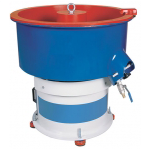
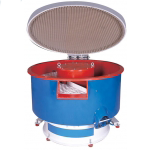
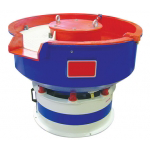
Vibratory Finishing Bowls And Troughs
Our showroom holds over 120 vibratory finishing machines. From the moment you contact us you will receive excellent care and technical advice on the best machine for your component finishing.
Get Expert Advice
We invite you to visit us and meet our experts. If you can’t bring your components in person, you’re welcome to send them to us for sample processing. If you’d like to learn more, give Paul or Adam a call on 01908 648757. We’d love to help you find the best solution for your finishing needs.